_gif.gif)
The heavily debated restrictions on the use of meat-related words in the labelling of plant-based products in the European Union are once again under the spotlight, as several MEPs are seeking to widen the scope of previously agreed upon terms.
The EU approved a package of reforms in June, restricting plant-based food producers from using a range of meat-related terms including ‘steak,’ ‘bacon,’ ‘chicken,’ ‘pork’ and ‘lamb’. The restrictions apply to plant-based meat alternatives, as well as cell-cultivated and hybrid products, that are sold in the EU market.
Led by MEP Céline Imart, the restrictions seek to protect livestock farmers and prevent consumer confusion, with supporters arguing that labelling plant-based products with meat-related terms is misleading to shoppers.
However, critics of the ban have strongly opposed this, with many food businesses and food industry associations emphasising that existing regulation is sufficient, and citing research studies suggesting that consumers are aware of what they are buying.
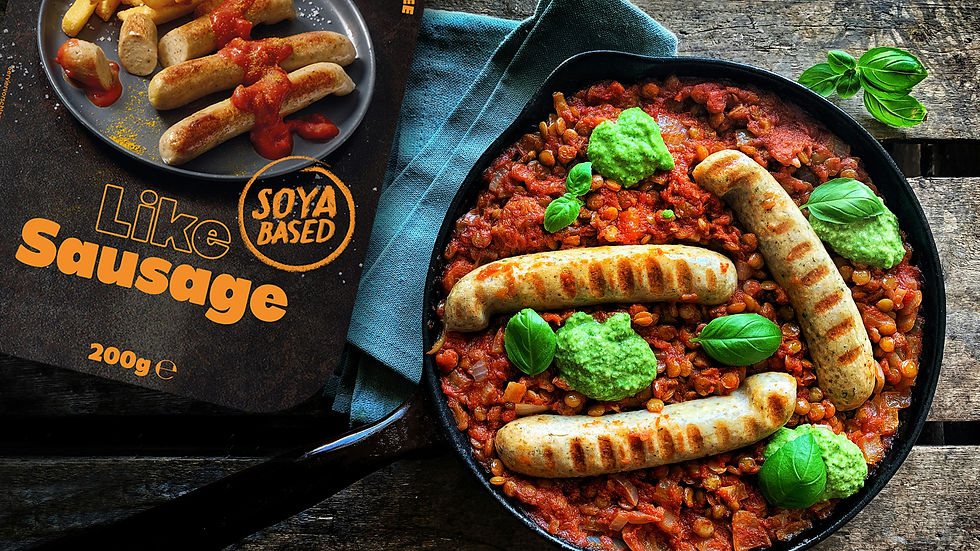
Now, amendments to the previously agreed restrictions have been put forward by a number of MEPs, including Imart, seeking to restrict further, more generic words not included in the original ban. These include ‘burger,’ ‘sausage,’ ‘meatball’ and ‘nugget’ among others, as well as more specific terms such as ‘black pudding’ and ‘pastrami’.
“An avoidable burden”
The NoConfusion coalition, comprising more than 600 companies, investors, retailers and other organisations, is petitioning against an extension of the restrictions.
In an open letter sent to Manfred Weber, president and chair of the Group of the European People’s Party, the coalition described the omission of words like ‘burger’ and ‘sausage’ from the ban as a “hard-won compromise” that “settled the question”.
It argued that tabling the restrictions for the third time in six years is a waste of valuable political capital and energy at a time when Europe faces “war on its borders, energy insecurity, strained transatlantic relations, a cost-of-living crisis and an openly acknowledged competitiveness gap with the US and China.”
Germany's Federal Association for Alternative Protein Sources (BALPro) projects the cost of the restrictions already adopted to be around €250 million for the German industry alone, in repackaging, rebranding and lost sales.
“Mandating new terminology, re-translating it across 24 official languages and re-auditing labels and marketing across the single market is exactly the kind of avoidable burden your simplification agenda is meant to remove,” the open letter states, requesting that Weber takes direct measures to oppose the extension.
“Fight to protect livestock heritage”
Meanwhile, The European Livestock Voice, a multi-stakeholder association comprising various organisations across the animal agriculture value chain, has vocalised its support for broader restrictions that encompass ‘format-related’ and generic terms like ‘sausage’ in addition to species-related or specific anatomical terms like ‘chicken,’ ‘pork’ and ‘bacon’.
Following the EU parliament’s previous vote to implement the restrictions in October last year, prior to further negotiations with the European Commission and Council, it said the debate was “far from over,” adding that there is “still a fight to protect livestock heritage and consumers from misleading labels that can deceive them into thinking these imitations are equivalent substitutes for meat and animal products”.
Whether consumers are confused has been a particular point of contention, with people and organisations on both sides of the debate putting forward research backing up their views.
In 2024, a study undertaken by market consultancy Ivox in Belgium found that 92.7% of consumers had never bought plant-based meat alternative products accidentally, instead doing so intentionally for health, taste, environmental or ethical reasons.
However, a 2023 study from the UK’s Agriculture and Horticulture Development Board (AHDB)’s retail and consumer insight team, with consultancy The Smithfield Collective, found that 50% of shoppers agreed meat-free products should not use words like ‘steak’ or ‘bacon’ and 47% disagreed with the use of ‘sausage’ and ‘burger,’ while shopping bays where meat and meat-free products are mixed together were seen as ‘potentially confusing’ by 52% of consumers.
The debate continues
The reopening of the negotiations will see a fresh vote taking place next year, continuing a longstanding debate over plant-based meat alternative labelling that has been underway in the EU for around seven years.
In 2024, the European Court of Justice (ECJ) blocked previous proposals in France to ban meat-related words in labelling plant-based foods, ruling that EU law already provides sufficient rules to protect consumers.
This earlier decree was consulted on with the CJEU after France’s Council of State expressed concerns that it could cause ‘serious and immediate’ harm to manufacturers selling plant-based protein products in France. The two decrees were officially annulled by the Council of State in January 2025.
Despite this, the topic has been repeatedly reintroduced, with further proposals seeking to put similar restrictions in place as those placed on plant-based dairy products – which are prohibited from using terms like ‘milk,’ ‘cheese’ and ‘yogurt’ in the EU and UK.
Oatly, a leader in the milk alternatives category, found itself in a five-year legal battle after using the marketing slogan ‘Post Milk Generation’ on the labels of its food and beverage products, with the UK Court of Appeal ruling that the brand can not use the phrase due to the inclusion of the word ‘milk,’ despite the word not being used to describe the product itself.
These developments highlight the significance of the ongoing labelling debates, with substantial implications for plant-based food and beverage producers selling their products across EU member states and beyond.
Treading carefully to ensure compliance – while considering how to market their products so that consumers are aware of their intended applications without being able to rely on familiar terminology – will be an important consideration as legislation evolves.